 Dogyoga
How to massage your dog: a calming 10-minute routine
A simple, calming dog massage you can do tonight: how to prepare, the six steps from ears to paws, the signs your dog is enjoying it, and when to skip it.
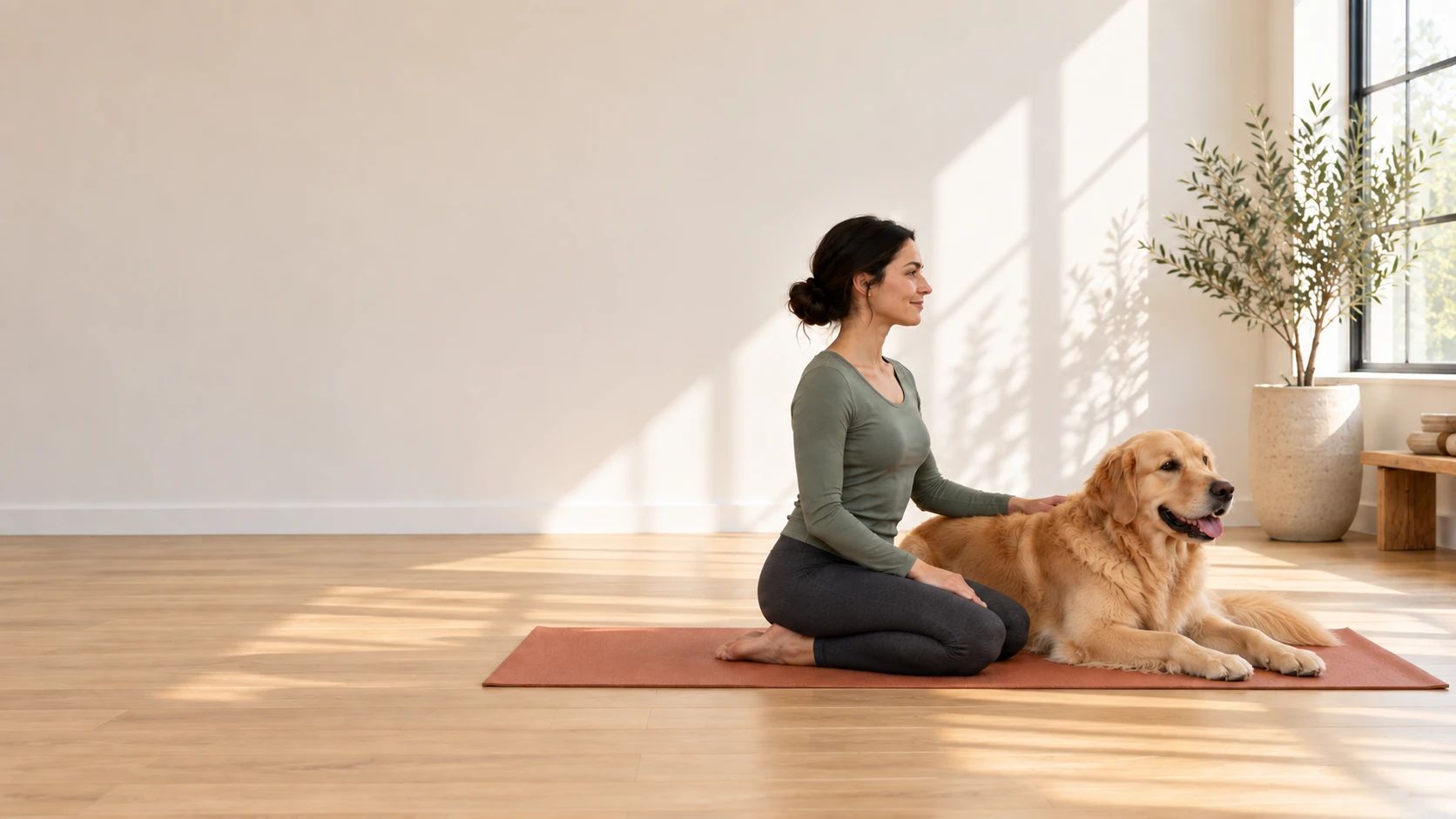
Learning how to massage your dog is one of the kindest things you can do for them, and it takes no special skill. A gentle dog massage helps many dogs relax, gives you a quiet moment together and lets you notice early any lump, sore spot or change in their coat. This calming 10-minute routine goes from the ears to the paws, with the signs your dog is enjoying it and the moments when it is better to skip it.
Before you start
- Pick a calm moment. After a walk, a meal that has settled and a toilet break. A dog full of energy won't want a massage.
- Choose a soft, quiet spot. A yoga mat, a rug or your dog's bed. Turn off the TV and keep your voice low.
- Calm yourself first. Take three slow breaths and relax your shoulders. Dogs feel tension in your hands.
- Let your dog come to you. Offer an open hand, palm up, and let them lean in. A massage is an invitation, never something you impose.
The 10-minute calming dog massage
1. Long welcome strokes (1 minute)
Start with slow, long strokes from the top of the head, down the neck and along the back to the base of the tail. Keep one hand on your dog the whole time. These strokes tell your dog what is coming and help them settle.
2. Ears (2 minutes)
Most dogs melt here. Hold the base of an ear gently between your thumb and fingers, then slide slowly to the tip. Make small circles at the base of the ear, where it meets the head. Switch sides. Watch for a sigh or eyes half closing: that is a yes.
3. Neck and shoulders (2 minutes)
With your fingertips, make small slow circles along both sides of the neck, never on the throat. Move down to the shoulders and the big muscles just behind them, where many dogs carry tension after walks or pulling on the lead.
4. Along the back (2 minutes)
Place your hands on either side of the spine, not on it, and make slow circles from the shoulders to the hips. Finish with a few long strokes from neck to tail. Keep the pressure light over the lower back, especially with older dogs.
5. Chest and legs (1 minute)
If your dog is lying on their side, stroke the chest gently with a flat hand, then slide slowly down each leg towards the paw. Many dogs are sensitive about their legs, so go slowly and stop at the first sign of discomfort.
6. Paws (1 minute, if your dog likes it)
Hold a paw lightly and make small circles on the pad with your thumb, then gently between the toes. Move to the next paw only if your dog stays relaxed. Plenty of dogs don't like their paws touched, and that is fine: skip this step.
Finish: rest together (1 minute)
End with a few long, slow strokes and then just rest your hand on your dog while you both breathe. Many dogs fall asleep here. It is the perfect moment for a short savasana side by side.

Signs your dog loves the massage
- Slow, deep breathing or a big sigh
- Eyes half closed, soft face, relaxed mouth
- Leaning into your hand or rolling to show more of their body
- Nudging you to continue when you stop
Signs to stop
- Turning the head away, licking lips or yawning repeatedly
- Stiffening, flinching or tucking the tail
- Moving away, growling or showing teeth
- Pain or sensitivity in one spot: note where it is and ask your vet
Stop calmly, give your dog space and try a shorter, lighter massage another day.
When not to massage your dog
Skip the massage and talk to your vet if your dog is injured, limping, recovering from surgery, has a fever, a skin problem, or a lump you haven't had checked. Massage is a lovely way to relax, but it is not a treatment. For older dogs with stiff joints, gentle strokes are usually welcome; our guide to yoga for senior dogs has more tips.
Make it a daily ritual
The calming effect grows with routine. A few minutes of massage every evening, at the same time and in the same place, becomes a signal that the day is over. Combine it with slow breathing and the effect is even stronger: see our breathing exercises for an anxious dog. Many people fold it into a short session of puppy yoga at home, alternating easy poses with moments of massage.
Frequently asked questions
How do I massage my dog to calm them down?
Choose a quiet moment, calm your own breathing, then use long slow strokes from head to tail, gentle circles at the base of the ears and soft circles along the neck and shoulders. Keep the pressure light and let your dog leave whenever they want.
Where do dogs like to be massaged?
Most dogs love the base of the ears, the neck, the shoulders and the chest. Many are more sensitive about their paws, legs, belly and tail, so go slowly there or skip them.
How long should a dog massage last?
Five to fifteen minutes is plenty. Ten minutes is a good routine. Stop sooner if your dog gets up or shows signs of discomfort.
Is it good to massage your dog every day?
Yes, a short, gentle massage every day is safe for most healthy dogs and helps them relax. Ask your vet first if your dog is injured, unwell or recovering from surgery.
Can I massage an anxious dog?
Gentle touch helps many anxious dogs, but go slowly and let them come to you. Start with a hand resting on the chest or long strokes on the back, and keep sessions short.
Sources
- Pendry, P. and Vandagriff, J. L. (2019). Animal Visitation Program (AVP) Reduces Cortisol Levels of University Students. AERA Open. A randomized trial: ten minutes of petting dogs and cats lowered students' cortisol, the stress hormone.
- American Veterinary Medical Association. Senior pets (owner brochure). When dogs become seniors, signs of ageing such as arthritis, and why regular vet checks matter.