 Dogyoga
Puppy yoga at home: a beginner's guide to doga with your own dog
Everything you need to start puppy yoga at home with your own dog: what doga really is, the kit, a first 10-minute session and the safety rules that keep it fun for both of you.
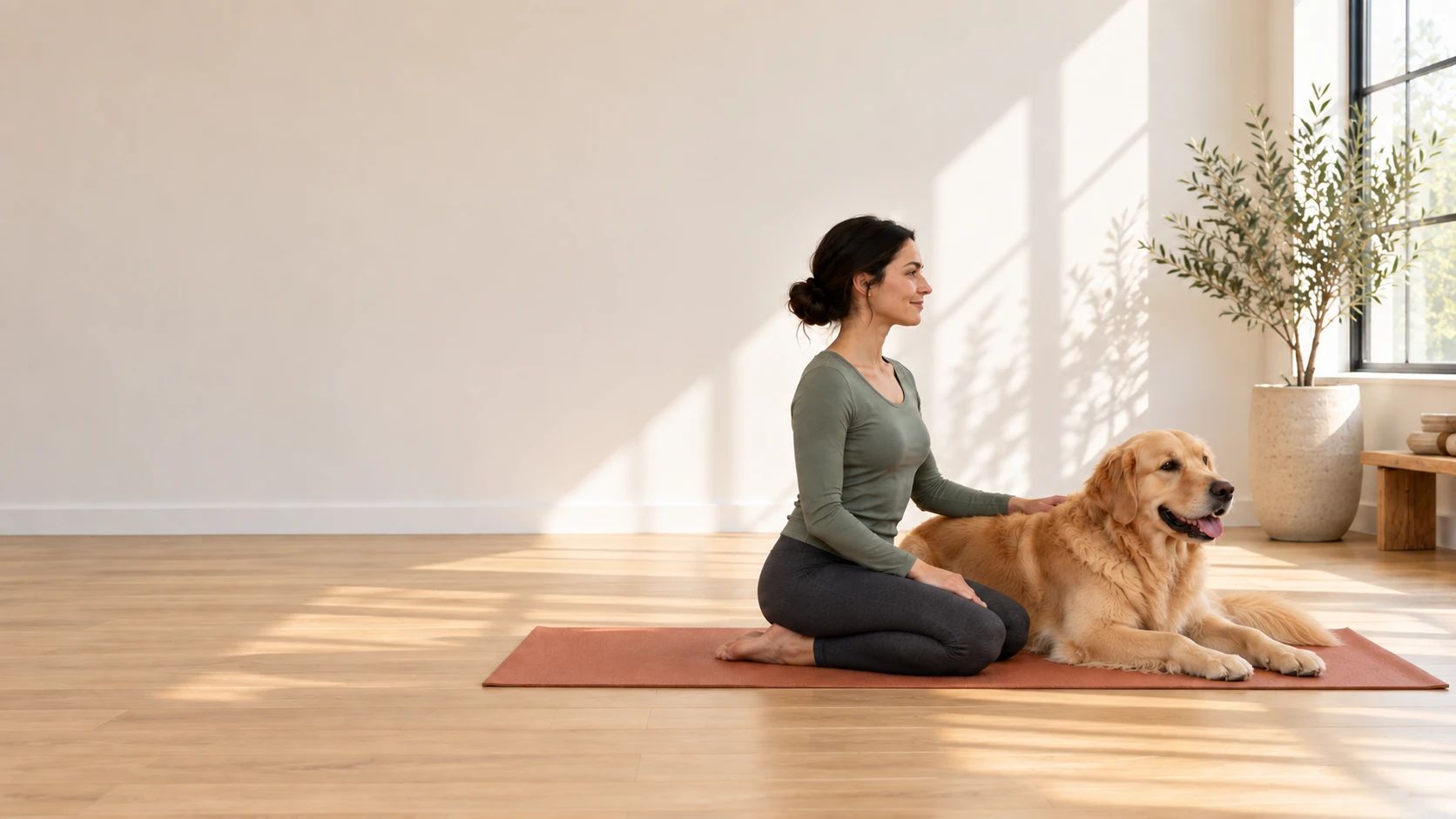
Puppy yoga at home is simply yoga you practise with your own dog on or beside the mat. You breathe, stretch and hold the poses; your dog joins in the way dogs do, by leaning against you, sniffing your hands, walking under your downward dog or falling asleep during the final rest. Also called doga or dog yoga, it asks for no special skills from your dog and no flexibility from you. This beginner's guide shows you how to set up, what a first session looks like and how to keep it calm and safe.
What is puppy yoga (and what is doga)?
The words get mixed up, so here is the short version:
- Doga (dog + yoga) is yoga practised with your own dog. The idea took off in the early 2000s in the United States and is now taught all over the world.
- Puppy yoga usually means a studio class where puppies wander between the mats while people practise. It is lovely, but the puppies aren't yours and the class happens once.
- Dog yoga and puppies yoga are the everyday names people type into Google for both.
Doing puppy yoga at home takes the best of both: the calm, playful mood of a puppy class, with the dog you live with, as often as you like. Your dog is never asked to "do yoga". The poses are for you; your dog's part is to be close, to be touched, sometimes to hold a sit or a stay, and mostly to share a quiet moment. If you want the full comparison, read Doga vs puppy yoga classes.
Why do yoga with your own dog?
- You actually practise. A dog waiting by the mat every evening is a better motivator than any streak counter.
- Your dog gets calm attention. Slow touch, eye contact and a quiet room are exactly what many dogs need after a busy day.
- You both slow down. Long exhales help you relax, and many dogs settle when the person next to them is calm.
- It builds trust. Short, gentle, predictable sessions teach your dog that the mat means good things.
What you need to get started
Almost nothing:
- A non-slip mat or rug. Dogs slide on bare floors; a grippy surface keeps both of you safe.
- A quiet corner with enough room for you to lie down and your dog to lie beside you.
- A few small treats and a bowl of water nearby.
- Timing that suits your dog. Wait about an hour after a meal, and pick a moment when your dog has already had a walk.
- Ten minutes. Short and regular beats long and rare, especially with a young dog.
Your first 10-minute puppy yoga session
Here is a simple beginner's flow. Move slowly, breathe through your nose, and let your dog come and go freely.
- Arrive (2 minutes). Sit cross-legged, one hand resting on your dog's side if they're close. Breathe in for four counts, out for six. This is connected breathing: match your pace to your dog's.
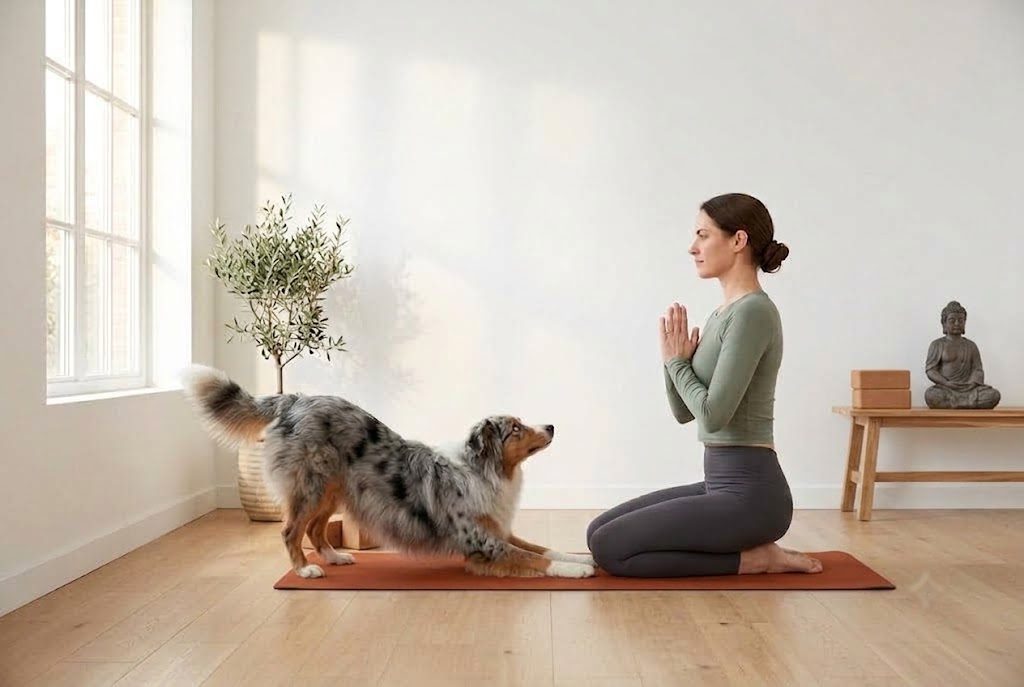
- Sniff hello (1 minute). Offer your open hands, palms up. Let your dog sniff and decide when to make contact.
- Cat-cow (1 minute). On hands and knees, round and arch your back with your breath. Small dogs often love walking underneath.
- Downward dog with a real dog (1 minute). Lift your hips into a gentle downward dog. A small or medium dog may walk through the tunnel; a large dog will usually lie beside the mat.
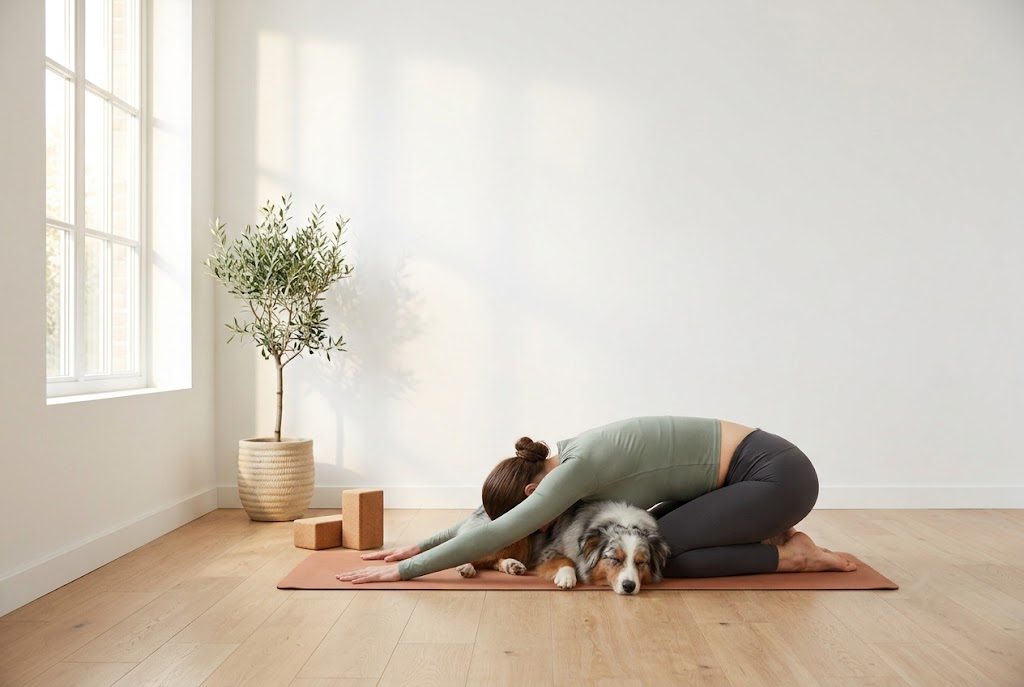
- Cuddle child's pose (2 minutes). Kneel, sit back on your heels and fold forward. Invite your dog to snuggle against your side.
- Savasana for two (3 minutes). Lie on your back, one hand on your dog if they're close. Many dogs fall asleep here, which is the best review your session can get.

For more poses and how your dog joins each one, see 7 dog yoga poses to try tonight.
How to keep your dog relaxed and interested
- Your calm is contagious. Slow down your movements and your voice. A soft voice and slow hands help most dogs settle.
- Reward calm, not tricks. Drop a treat between your dog's paws when they lie down near you. You're rewarding stillness, not performance.
- Never hold or force a position. If your dog walks off, carry on. They'll often come back when you lie down.
- Keep sessions short. Five to ten minutes for puppies, up to twenty or thirty for adult dogs who enjoy it.
- Use a routine. Same mat, same time, same opening breath. Dogs love knowing what comes next.
Safety first: when to skip or stop
Dog yoga is gentle, but a few rules matter:
- No lifting or jumping for puppies. Their joints are still growing. Read At what age can a puppy do yoga? before starting with a young dog.
- Go gentler with seniors and dogs with arthritis: warm up, stay low to the ground and keep holds short. See Yoga for senior dogs.
- Flat-faced breeds such as pugs and French bulldogs overheat quickly: keep the room cool and the pace slow.
- Stop if your dog pants hard, yawns repeatedly, licks their lips or walks away. Those are signs of stress or tiredness.
- Ask your vet first if your dog has pain, a recent injury or surgery.
Frequently asked questions
Do I need yoga experience to do puppy yoga at home?
No. The poses in a beginner's doga session are basic: sitting, kneeling, a gentle downward dog and lying down. Move within your comfort and skip anything that hurts.
How often should we practise?
Two to four short sessions a week is a great start. Many people end up doing a few minutes every evening because their dog asks for it.
What if my dog won't stay on the mat?
That's normal. Dogs join in their own way. Keep practising, reward calm moments with a treat, and your dog will learn that the mat is a nice place to be.
Can I do dog yoga with two dogs?
Yes, as long as both are calm around each other. Give each dog space and a treat of their own, and start with the lying-down poses.
Keep going
Once the first session feels easy, add a pose or two, try a morning routine or a longer relaxing session. The Dogyoga app builds a new guided session every day from your dog's age, size and energy, with a calm voice that counts your breaths, so you never have to plan the next pose yourself.
Sources
- Zaccaro, A. et al. (2018). How Breath-Control Can Change Your Life: A Systematic Review on Psycho-Physiological Correlates of Slow Breathing. Frontiers in Human Neuroscience. Slow breathing was linked with more relaxation and less anxiety and arousal.
- Nagasawa, M. et al. (2015). Oxytocin-gaze positive loop and the coevolution of human-dog bonds. Science 348, 333-336. Mutual gazing between dogs and their owners raised oxytocin in both.