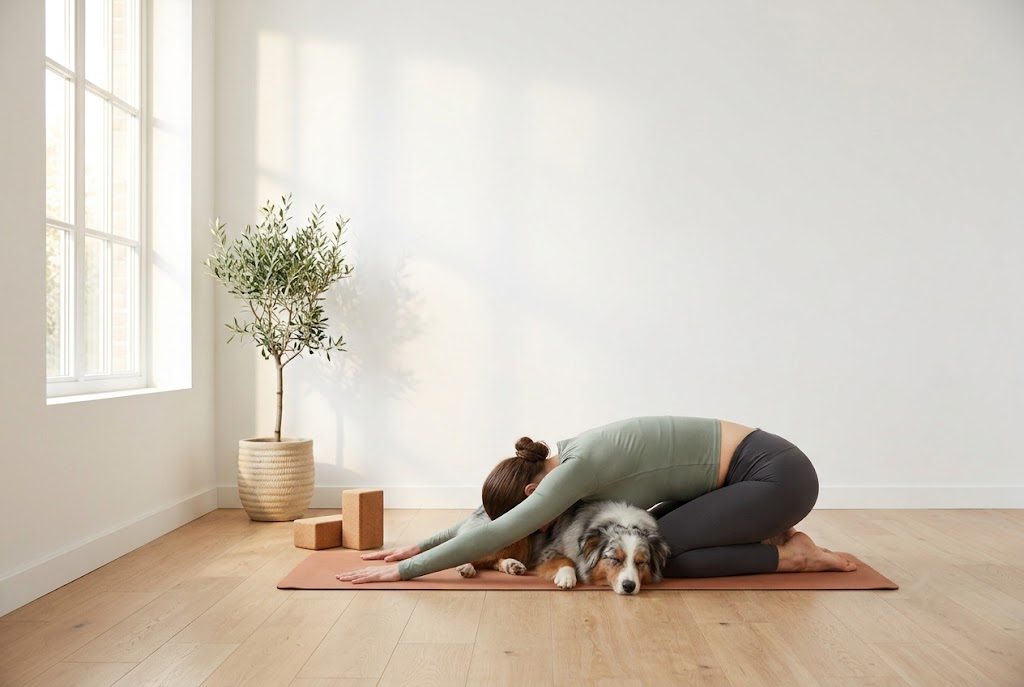
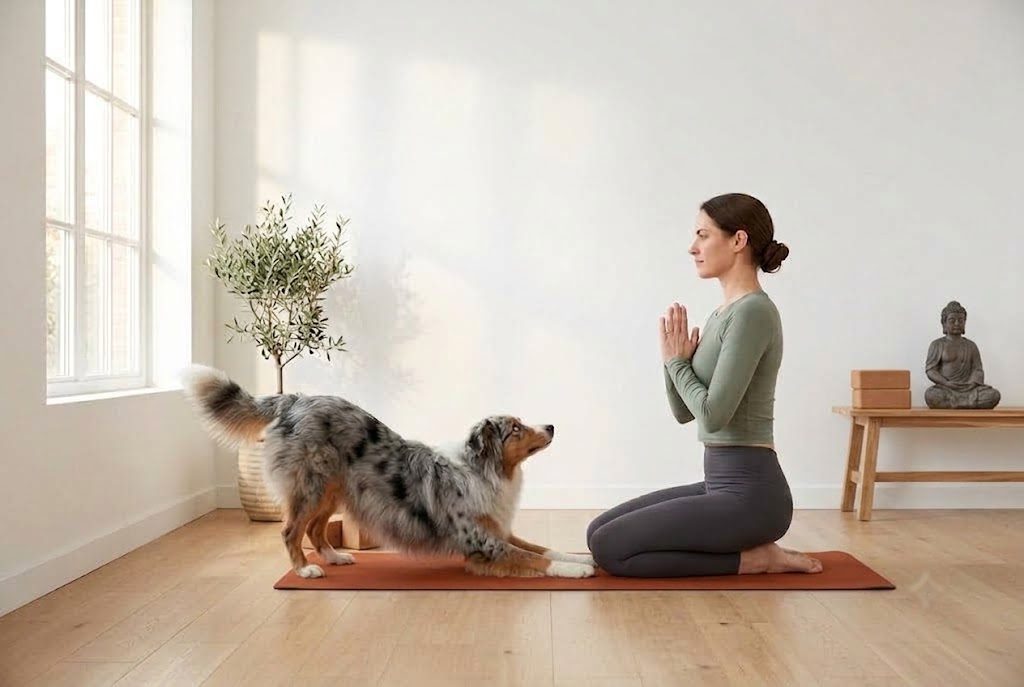
 Dogyoga
Yoga for senior dogs: gentle doga for older dogs and their people
Older dogs can't keep up with the zoomies any more, but they love slow, close time with you. Here's how to adapt doga for a senior dog, safely.
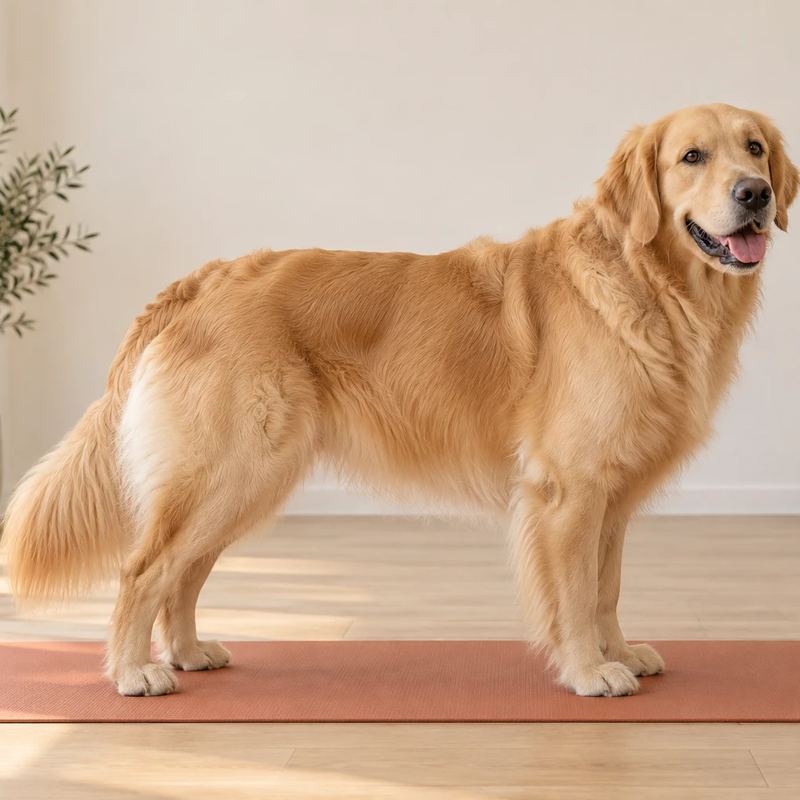
Yoga for senior dogs isn't about stretching your old dog; it's about sharing slow, close time on the mat while you move gently beside them. For many older dogs, a calm doga session becomes a favourite part of the day: warm hands, a soft voice, a comfortable mat and nothing to rush. Here's how to make it safe and enjoyable when your dog is getting older.
New to doga? Start with our beginner's guide to puppy yoga at home: everything in it works for older dogs too, just slower.
When is a dog a senior?
It depends on size. Small dogs are often considered senior from about 8 to 10 years old; large and giant breeds from around 6 to 8. Signs your dog is ageing include stiffness after rest, slower walks, reluctance to jump and more time asleep.
How doga helps older dogs
- Gentle, calm attention. Senior dogs often get less play time; doga gives them focused, affectionate time.
- Comfortable handling. Slow massage along the back, shoulders and paws is soothing and helps you notice lumps, heat or sore spots early.
- A predictable routine. The same mat, the same time, the same calm start. Routine is reassuring for older dogs, especially if their hearing or sight is fading. If your older dog gets worried easily, the routine in How to calm an anxious dog with breathing pairs well with it.
- Good for you too. Slow breathing and gentle stretches help you unwind, and your calm helps your dog settle.
Senior dog doga: the golden rules
- Stay low. Choose poses on the floor: seated, kneeling and lying down. No jumping on or off anything.
- Keep it short. 10 to 15 minutes is plenty. Stop sooner if your dog is tired.
- Warm and soft. Use a thick, non-slip mat or a folded blanket, in a warm room. Cold floors stiffen old joints.
- Let your dog choose. Your senior dog can lie down, change position or leave at any time.
- Never stretch your dog's legs or back yourself. Physical therapy exercises should only be done as shown by your vet or a canine physiotherapist.
The best poses for yoga with a senior dog

- Connected breathing. Sit beside your dog and rest a hand on their side. Breathe slowly; many seniors sigh and settle within a minute.
- Welcome strokes. Kneeling, give a slow massage from head to tail with a flat, warm hand. Avoid pressing on joints.
- Seated side stretch. Sit tall and lean gently to one side, then the other, with your dog lying beside you and a hand resting on them.
- Ear massage and chin rest. Gently stroke the base of the ears, or let your dog rest their chin in your palm. Calm, trusting moments.
- Paw massage. If your dog is comfortable with it, slowly massage each paw pad and between the toes.
- Savasana for two. Lie down beside your dog. Match your breathing to theirs. Stay as long as you both like.
For more ideas, see 7 dog yoga poses to try tonight, and pick only the ones that stay close to the floor.
Adapting for arthritis and stiff joints
- Let them lie on their preferred side. Don't reposition a stiff dog.
- Keep the massage light. A resting hand is often more welcome than rubbing.
- Watch the way up. Getting up can be the hardest part; give your dog room and time, and a non-slip surface.
- Short and often beats long and rare. Two 10-minute sessions are gentler than one 30-minute session.
Signs your senior dog has had enough
- restlessness, repeated position changes or moving away;
- panting in a cool room;
- stiffness, limping or reluctance to lie down;
- licking a particular joint.
If you notice pain, end the session calmly and let your vet know.
Frequently asked questions
Is yoga good for senior dogs?
Gentle doga can be: it offers calm, affectionate attention and soothing touch. Your dog doesn't stretch or perform; they rest with you while you move gently. Check with your vet first if your dog has health problems.
How long should a doga session be for an old dog?
About 10 to 15 minutes, on a warm, soft, non-slip surface, with lots of lying-down time.
Can dogs with arthritis do yoga?
They can join a very gentle session that stays on the floor, as long as your vet agrees. Avoid any pose that asks your dog to stand for long, jump or climb.
Should I stretch my senior dog's legs?
Only if your vet or a canine physiotherapist has shown you how. In doga, the stretches are for you; your dog just rests and enjoys the touch.
The bottom line
Yoga for senior dogs is about slowing down together. Keep it low, warm, short and gentle. The Dogyoga app adapts to your dog's age: for seniors it builds shorter, slower sessions and leaves out jumps and high-energy poses.
Sources
- American Veterinary Medical Association. Senior pets (owner brochure). When dogs become seniors, signs of ageing such as arthritis, and why regular vet checks matter.
- Zaccaro, A. et al. (2018). How Breath-Control Can Change Your Life: A Systematic Review on Psycho-Physiological Correlates of Slow Breathing. Frontiers in Human Neuroscience. Slow breathing was linked with more relaxation and less anxiety and arousal.