 Dogyoga
How to calm an anxious dog with your breathing (and a little doga)
Dogs read our bodies all day long. When you slow your breathing, soften your hands and settle on the floor, many anxious dogs settle too. Here's a simple routine to try.
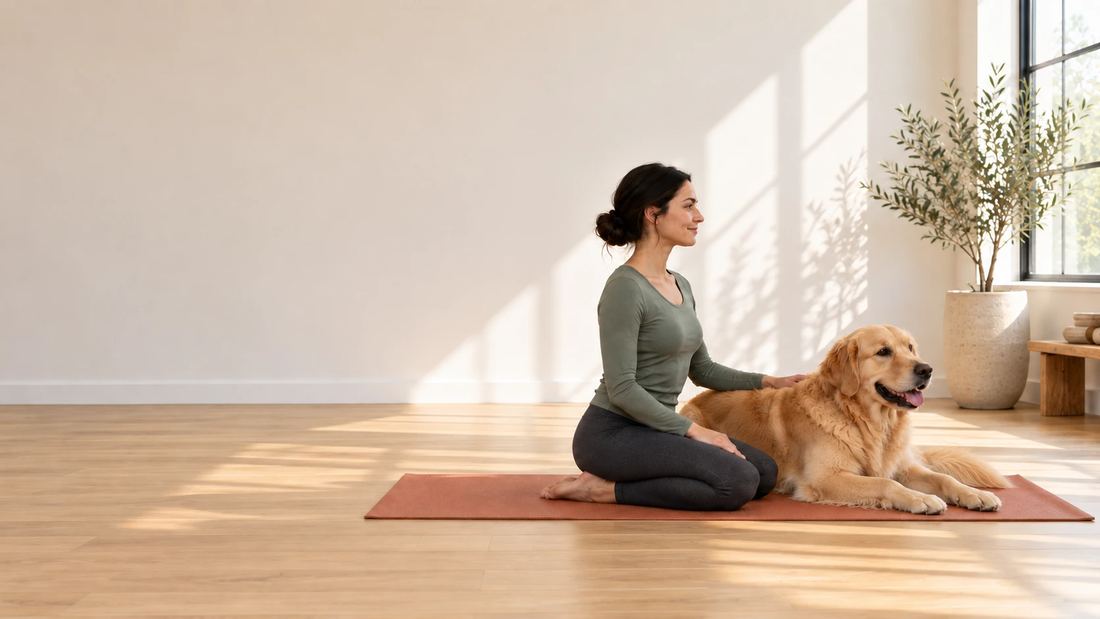
If you want to calm an anxious dog, one of the most useful tools is one you always have with you: your own breathing. Dogs watch our bodies closely. When you slow down, lower your voice and settle on the floor, many dogs take the cue and settle too. Combined with gentle touch and a predictable routine, this is the idea behind doga for anxious dogs. Here's a simple, step-by-step way to use it.
Why your breathing can help your dog
When we're stressed, we breathe fast and high in the chest, move quickly and speak louder. Dogs notice all of it. When we breathe slowly, with long exhales, our shoulders drop, our movements soften and our voice gets quieter. For many dogs, that shift is reassuring: it signals that there's no danger here.
You're not "fixing" your dog's anxiety with your breath. You're giving your dog a calm, predictable place to be, which is often the first step.
Signs of anxiety in dogs
- panting or pacing when they're not hot or excited;
- yawning, lip licking or turning their head away;
- tucked tail, ears pinned back, whites of the eyes showing;
- trembling, hiding or following you from room to room;
- sudden destructive behaviour or accidents in the house.
A 10-minute calming routine
Do this in a quiet room, on a mat or rug your dog likes. Let your dog come and go freely.
- Sit down on the floor (1 minute). Being lower and still is less intense for a worried dog than standing over them. Don't call your dog; let them come to you.
- Slow your breathing (2 minutes). Breathe in through your nose for four counts and out for six. Let your shoulders drop.
- Offer a resting hand (2 minutes). If your dog comes close, rest a flat hand on their shoulder or side. Don't pat; just rest. This is connected breathing.
- Slow strokes (2 minutes). If your dog leans in, stroke slowly from the neck along the back, following the direction of the fur. Stop if they move away.
- Sniffing break (1 minute). Scatter a few treats on the mat. Sniffing and searching is a natural way for many dogs to calm down.
- Rest together (2 minutes). Lie down beside your dog. Keep breathing slowly. It's fine if they fall asleep.

Calming tips for stressful moments
Storms and fireworks
- Start the routine before the noise begins, while your dog is still relaxed.
- Close curtains, play soft background sound and offer a hiding place.
- Don't force your dog out of a hiding spot; sit near it and breathe slowly.
- Full plan for noisy nights: how to calm a dog during fireworks.
Visitors
- Give your dog a quiet room with their mat, away from the front door.
- Use the routine afterwards to help them come down from the excitement.
- More holiday tips: how to calm a dog when guests visit.
Car rides and vet visits
- Practise the breathing and resting-hand steps at home first, so they become familiar.
- Bring the same mat or blanket; familiar smells help.
What not to do
- Don't force contact. Holding an anxious dog still can make them more afraid.
- Don't punish fear. Growling, hiding or trembling are communication, not bad behaviour.
- Don't try a new routine during a crisis. Practise when your dog is calm so it becomes a familiar ritual.
Building calm with regular doga
The routine works best as a habit. Short, regular sessions on the same mat teach your dog that this is a calm place, and that can help on difficult days too. Our beginner's guide to puppy yoga at home explains how to set up, and 7 dog yoga poses to try tonight gives you gentle poses to add, such as butterfly nest and savasana for two.
Frequently asked questions
Can my breathing really calm my dog?
It won't cure anxiety, but many dogs relax more easily when the person next to them is calm, still and slow. Slow breathing is the easiest way to get there.
How long does it take for a dog to relax?
Some dogs settle within a few minutes; others need weeks of short, regular sessions. Consistency matters more than length.
Is doga good for anxious dogs?
A gentle doga routine, with no forcing and plenty of lying-down time, can give anxious dogs a predictable, calm experience. Avoid busy classes; start at home.
When should I see a vet about my dog's anxiety?
If the anxiety is new, severe, getting worse or comes with changes in appetite, sleep or toileting. Pain is a common hidden cause.
The bottom line
To calm an anxious dog, start with yourself: sit low, breathe slowly, rest a hand and let your dog choose. The Dogyoga app has a Calm an anxious dog goal that builds a short, slow session of breathing, massage and resting poses, guided by a soft voice.
Sources
- Zaccaro, A. et al. (2018). How Breath-Control Can Change Your Life: A Systematic Review on Psycho-Physiological Correlates of Slow Breathing. Frontiers in Human Neuroscience. Slow breathing was linked with more relaxation and less anxiety and arousal.
- Pendry, P. and Vandagriff, J. L. (2019). Animal Visitation Program (AVP) Reduces Cortisol Levels of University Students. AERA Open. A randomized trial: ten minutes of petting dogs and cats lowered students' cortisol, the stress hormone.