 Dogyoga
Doga vs puppy yoga classes: what's the difference, and which is right for you?
A puppy yoga class and a doga session both put dogs on yoga mats, but one is a one-off treat and the other is a habit with your own dog. Here's how they compare.
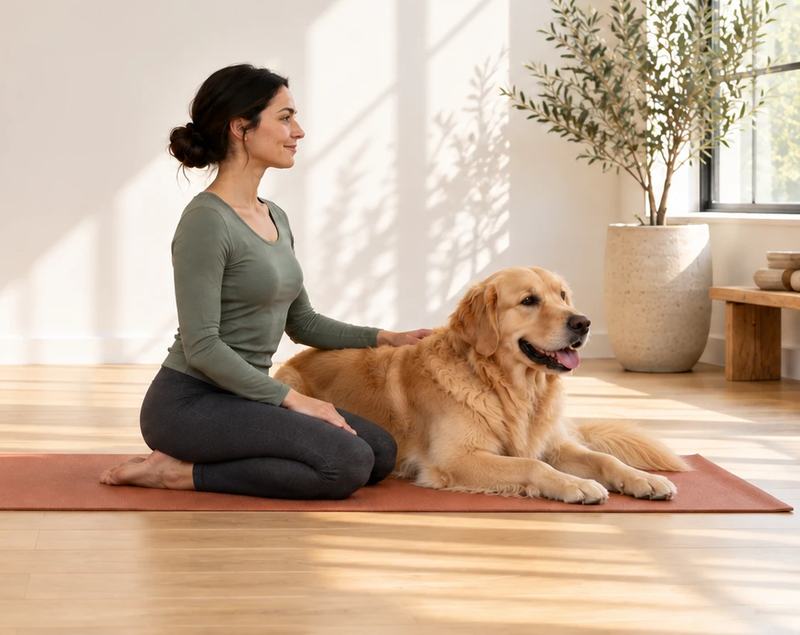
Doga and puppy yoga classes both combine yoga with dogs, and people often use the words interchangeably. They're actually two quite different experiences. A puppy yoga class is an hour in a studio surrounded by someone else's puppies. Doga is yoga with your own dog, at home or in a class, as often as you like. Here's how they compare, so you can choose what's right for you.
What is a puppy yoga class?
In a typical puppy yoga class, a studio partners with a breeder or rescue, and a group of young puppies roams the room while a teacher leads a gentle yoga session. Most of the time is spent cuddling puppies and taking photos. It's joyful and very popular, which is why "puppy yoga" is now one of the most searched yoga terms.
What to know before you book:
- The puppies aren't yours, so the session is a one-off experience rather than a habit.
- Classes are often around an hour, and prices are usually well above a regular yoga class (see how much puppy yoga costs).
- Welfare matters. Young puppies need a lot of sleep and shouldn't be passed around for long periods. Good organisers keep sessions short, limit handling, give puppies quiet spaces and only work with fully vaccinated puppies.
What is doga?
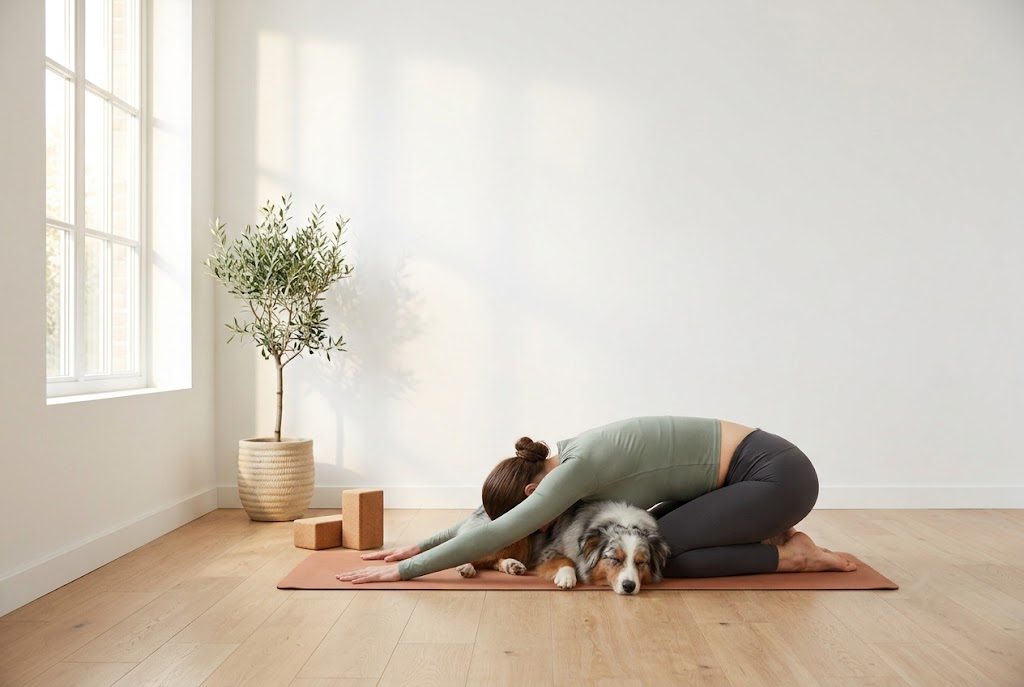
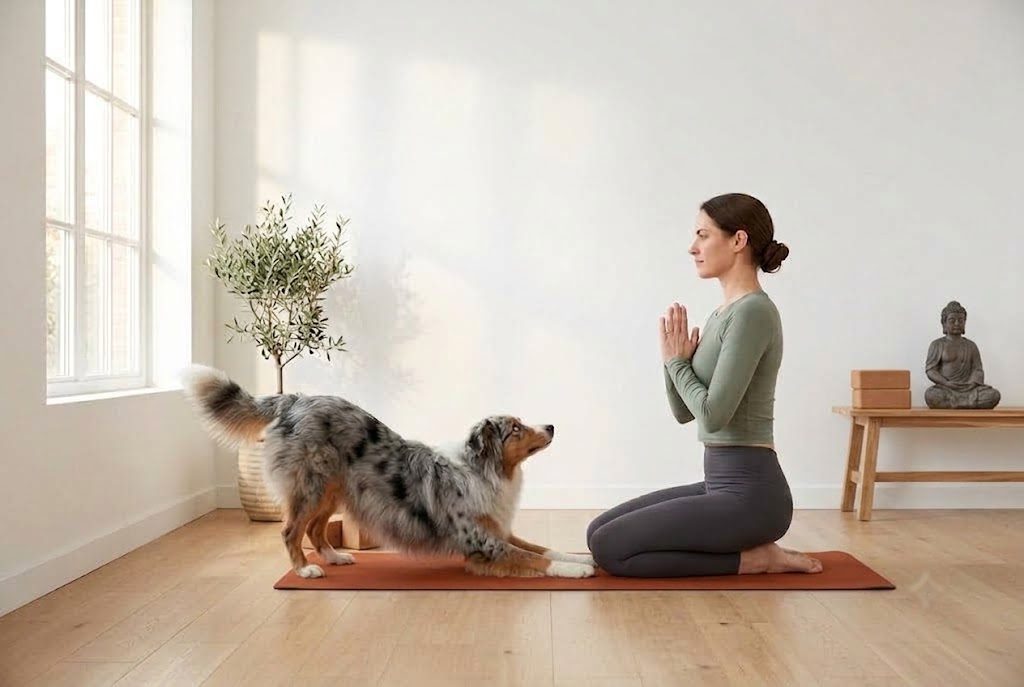
Doga is yoga practised with your own dog. It was popularised in the United States in the early 2000s and is now taught worldwide, in studios and increasingly at home. The poses are for you; your dog joins in freely by lying against you, walking under your downward dog, holding a stay or resting during savasana. You can read more in our beginner's guide to puppy yoga at home.
Doga vs puppy yoga: side by side
- The dog: puppy yoga uses puppies from a breeder or shelter; doga is with your own puppy or adult dog.
- How often: puppy yoga is a special occasion; doga can be every day.
- Length: puppy yoga classes are usually about an hour; doga at home can be 5 to 30 minutes.
- Where: puppy yoga happens in a studio; doga works in any quiet corner with a mat.
- What you build: puppy yoga gives you a lovely memory; doga builds a daily ritual and a stronger bond with your dog.
- Cost: puppy yoga is paid per class; doga at home is free or the price of an app.
Which is right for you?
Choose a puppy yoga class if:
- you don't have a dog and simply want an hour of puppy joy;
- you'd like to meet adoptable dogs from a responsible rescue (here's how adopting from puppy yoga works);
- you're treating a friend to a memorable experience (and wondering what to wear to puppy yoga).
Choose doga if:
- you have a dog, of any age, and want to spend calm time together;
- you'd like a regular, short practice rather than a one-off;
- your dog is anxious, older or very energetic and would benefit from a predictable routine.
Many people do both: a puppy yoga class for fun, and doga at home as the everyday habit.
How to bring the puppy yoga feeling home
- Pick a regular time, such as after the evening walk.
- Lay down a non-slip mat in a quiet corner.
- Start with breathing and gentle strokes so your dog learns the mat means calm.
- Add a few easy poses, like child's pose, puppy pose and a gentle downward dog. See 7 dog yoga poses to try tonight.
- End with savasana for two. It's the moment most dogs like best.
If you have a young dog, read At what age can a puppy do yoga? first. There are a few simple rules to protect growing joints.
Frequently asked questions
Is puppy yoga the same as doga?
Not quite. Puppy yoga usually means a class with visiting puppies; doga means yoga with your own dog. Both are sometimes called dog yoga.
Is puppy yoga good for the puppies?
It can be, when sessions are short, puppies are vaccinated, handling is gentle and they have somewhere quiet to sleep. Ask organisers how they look after the puppies before you book.
Can I do puppy yoga with my own puppy at home?
Yes, and it's a great way to build calm habits early. Keep sessions to about 5 minutes for young puppies and let them join in on their own terms.
Do I need a class to learn doga?
No. The poses are beginner-friendly, and a guided app or video is enough to start. A class can be a nice extra if there's one near you.
The bottom line
Puppy yoga classes are a treat; doga is a habit. If you share your home with a dog, doga gives you the calm and the cuddles of puppy yoga every day. The Dogyoga app makes that easy with a new guided session each day, built around your own dog.